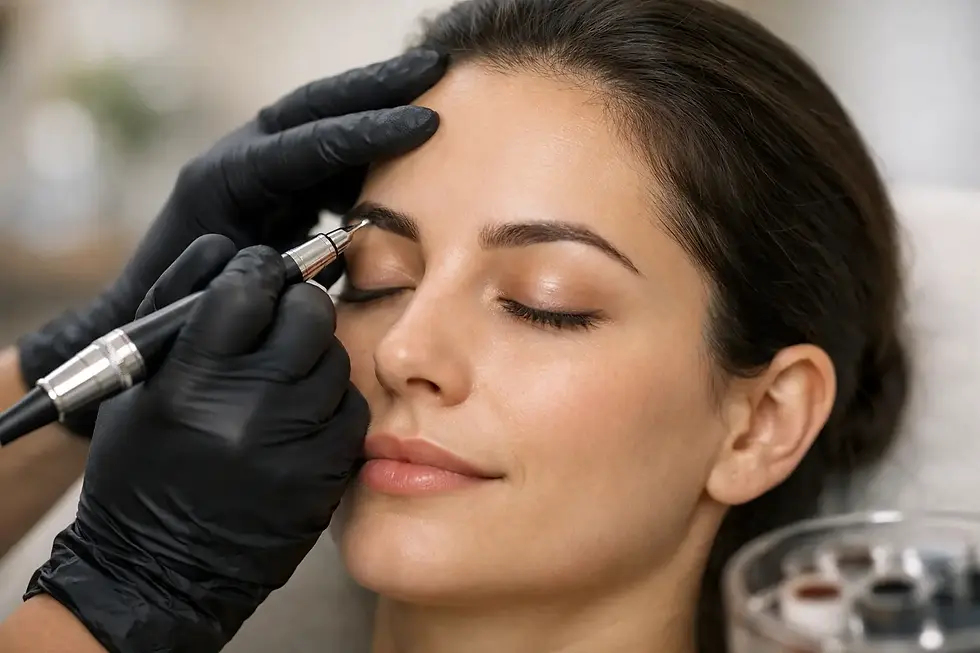
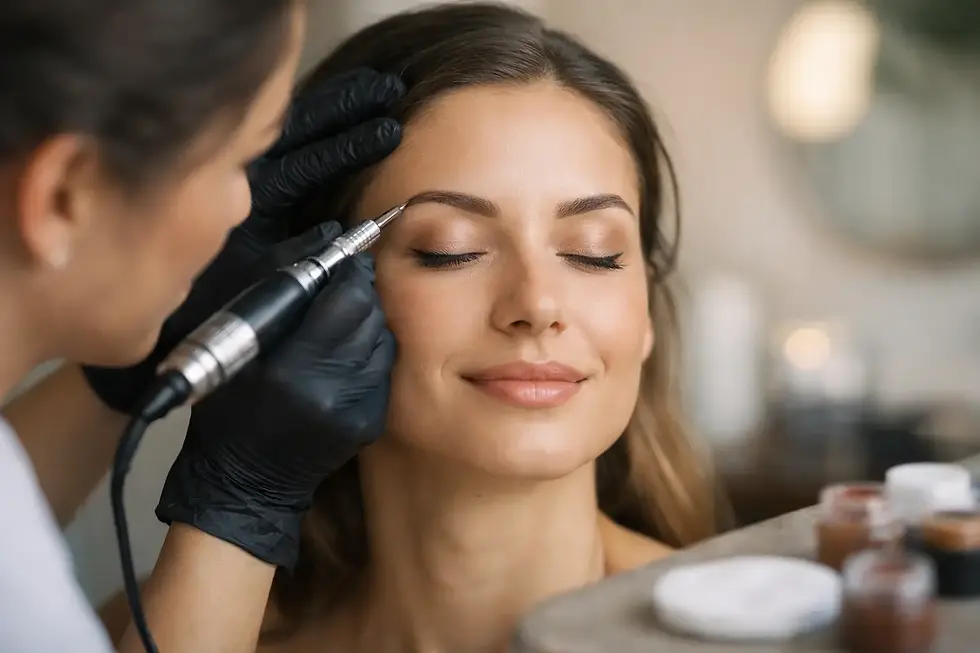
How do you choose the right lip blush shade for you?

A lip blush can make your lips look fresher, more even, and more softly defined, without having to apply lipstick every morning. But how do you choose the right lip blush shade when you want the result to look natural and truly suit you? The answer doesn't lie in one universally beautiful color, but in the combination of your own lip color, skin undertone, facial features, and the look you have in mind.
Lip blush is not about a full-coverage, striking lipstick look. The treatment primarily enhances what is already beautiful about your lips: a healthy color, a clearer contour, and more balance in the face. That is why the choice of color deserves just as much attention as the treatment itself.
How do you choose the right lip blush shade?
The best lip blush shade is usually not a color you simply point to on a color chart. A pigment looks different on the skin after healing than it does in the pot. Moreover, it interacts with your natural lip color. Someone with naturally quite pale lips will get a different result with the same shade than someone with more pink, brown, or purplish pigmentation in their lips.
During a professional consultation, you are therefore not only asked which lipstick you like. Your natural lip tone, skin undertone, the shape and symmetry of your lips, and your daily style are also taken into account. Do you rarely wear makeup and do you mainly want to wake up with a well-groomed appearance? Then a soft, transparent shade often suits you better. Do you prefer a bit more definition? Then a warmer or slightly more intense shade might be the right choice, without the result looking harsh.
Your natural lip color is the starting point.
Lip blush is a pigmentation treatment, not a layer of lipstick that completely covers your natural color. Therefore, your own lip color continues to influence the healed result. For light pink lips, soft rosé and nude shades can look very fresh. Lips with a natural berry tint can look beautiful with a muted mauve, rosewood, or warm berry tone.
Uneven discoloration also deserves attention. Some lips are darker at the edges, have cooler zones, or show some brown or purple. In that case, a neutralizing approach may be necessary first. The goal is not to immediately apply a pronounced final color, but to first create a more balanced base. Only then will the chosen blush color come into its own beautifully and predictably.
Look at your skin's undertone
Your skin undertone helps determine which colors harmonize with your face. That undertone is not the same as a light or dark skin color. It can be warm, cool, or neutral.
With a warm undertone—often with a golden, peachy, or olive-colored impression—peach, warm nude, coral pink, and terracotta pink usually provide a soft vibrancy. A shade that is too cool or lilac-like can sometimes make the face look flat or tired.
With a cool undertone—with a rosy, bluish, or bright appearance—dust rose, raspberry, cool rosé, and soft mauve often complement beautifully. Very orange pigments, on the other hand, can stand out from the rest of your complexion.
A neutral undertone generally offers the most flexibility. However, the natural lip color remains the deciding factor here as well. A neutral rosewood shade, for example, is popular because it gives many women a well-groomed, natural look, but the right balance between warm and cool pigments remains a personal choice.
Pay attention to your overall appearance, not just your skin.
The color of your hair, your eyebrows, your eyes, and even the makeup you wear daily influence how a lip blush shade feels. A very light, cool blonde look sometimes calls for a different softness than a woman with dark hair and pronounced eyebrows. It is not about fixed rules, but about balance.
That is why a shade that looks beautiful in a photo is not automatically the best choice for your face. Reference photos are certainly useful to show which vibe appeals to you: fresh and subtle, warm and sunny, elegant rosé, or something more defined. Just don't view them as an exact color order. Your lips always form the real canvas.
Determine how much color you really want to see
For a natural result, it is wise not to simply say that you want “a nude” or “somewhat pink.” Think especially about the intensity that suits your routine. Do you want people to mainly see that you look rested, without being able to point out why? Or is it okay for your lip color to be clearly visible even without extra makeup?
A very subtle lip blush often gives the effect of well-hydrated lips with a healthy natural color. This is ideal if you wear little makeup or are looking for a refined, timeless look. A medium intensity provides more definition and can instantly add some warmth to a pale complexion. A deeper shade can be beautiful when carefully matched, but it does require a conscious choice: the pigment softens after healing, but it remains a long-lasting enhancement.
Are you unsure between two intensities? Then a natural starting point is usually the safest option. With PMU, it is often more beautiful to build up elegantly than to go too dark or too bright immediately. A touch-up offers the opportunity to further refine the result if necessary.
Take healing and color changes into account.
The color immediately after your treatment is not the final result. In the first few days, the lips usually appear brighter and more intense. During the healing process, the color may temporarily appear very light, before gradually becoming visible again. The final result will only show after a few weeks.
That process is an important reason not to judge by the color on the first day. An experienced specialist selects the pigment with that healing in mind. The color is matched to how it is expected to soften in your skin, not just how it looks immediately after the treatment.
Skin type, lifestyle, sun exposure, lip care, and natural metabolism also influence pigment retention. For some clients, a color heals warmer, while for others it is slightly cooler or lighter. Honest guidance therefore means that no promise is made of a color exactly identical to a classic lipstick. However, we do work carefully towards a result that is natural, flattering, and suitable for you.
Avoid these common choices
Choosing a popular lipstick because it looks good on someone else is tempting, but not always wise. Lips have their own undertone and pigmentation. What looks like a soft dusty rose on your friend can suddenly appear much cooler or darker on your lips.
Also, do not choose based solely on your daily nude lipstick. That lipstick is often opaque and corrects your natural lip color, whereas lip blush works with that color in a more transparent way. Feel free to bring your favorite products to the consultation, but let the specialist assess which pigment mix can evoke the same feeling.
Finally: do not ask for a very light beige shade if your lips are naturally darker and you want a fresh look. A choice that is too pale can sometimes turn grey. A soft rose or peach undertone usually adds more life, while the result remains discreet.
The intake makes the difference
A good color choice is made in consultation. At Koko Beauty Spot, we listen beforehand to what you find beautiful, but also provide honest advice on what yields the most beautiful result technically and aesthetically. So, you don't have to walk in with a definitive shade in mind. It helps especially if you can explain how you want to feel after the treatment: more natural, fresher, softer, or just a little more pronounced.
During that consultation, there is an opportunity to clarify expectations. Do you simply want to correct color loss? Do you want to make an asymmetrical contour less noticeable? Or are you mainly done with touching up lipstick daily? Each starting point can lead to a different pigment choice.
If possible, bring a few photos of yourself to your appointment where you like your lip color, for example with your favorite makeup. Also, preferably come to the consultation without heavy lipstick, so that your natural lip color is clearly visible. This way, the chosen shade can be carefully built up around your face, rather than around a trend.
The right lip blush shade ultimately doesn't feel like a mask. It makes you look like you've slept well, drunk enough water, and regained just that little bit of your natural color. So give yourself the space for personal advice: a carefully chosen shade stays more beautiful every day than a quick color choice that doesn't quite feel like you.