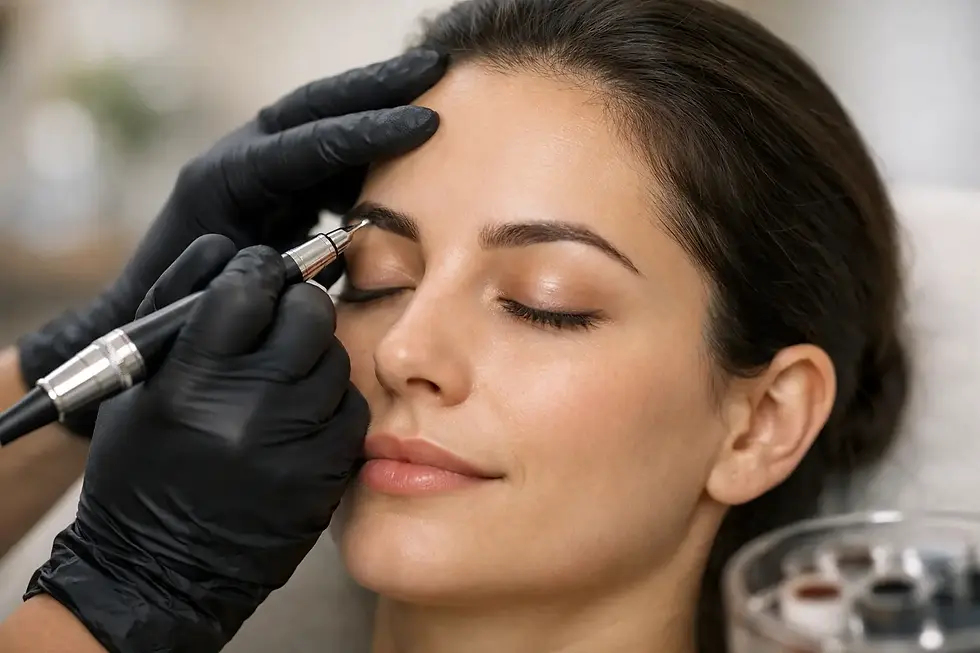
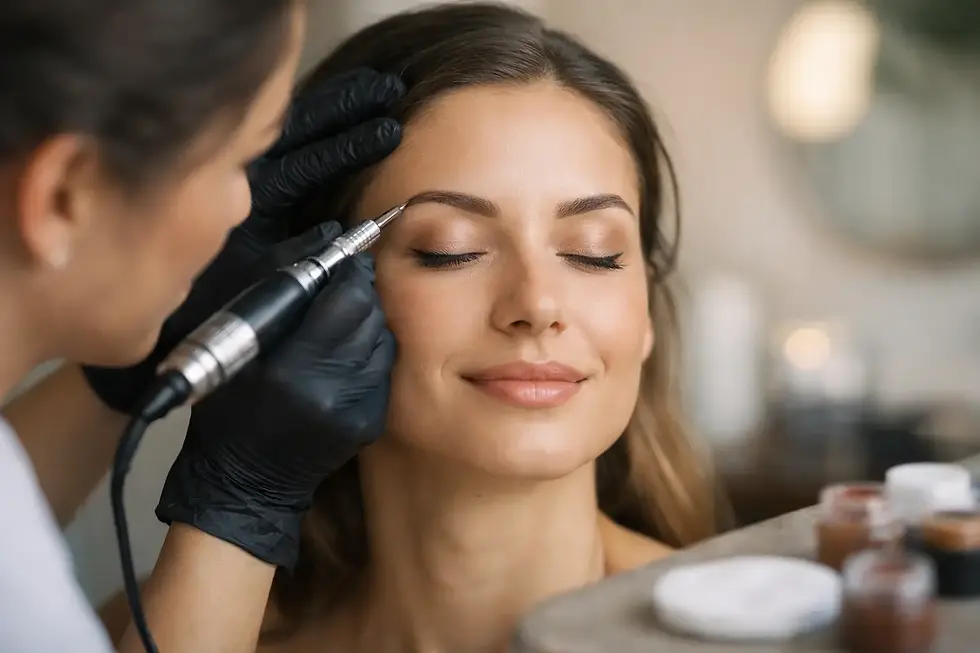
How long do nano brows last after treatment?

In the first few weeks after your treatment, your eyebrows often look more prominent than expected. That’s normal: the color is more intense at first, and your skin needs time to heal. Wondering how long nano brows last? On average, you can expect a beautiful, visible result for one and a half to three years, with a touch-up when the color gradually fades.
Nano brows aren’t a fixed commitment with a set expiration date. Your skin type, lifestyle, skincare routine, and the chosen color all play a role in determining how long the fine hair strokes will remain clearly visible. During a personal consultation, we therefore not only assess which shape suits your face but also discuss what you can realistically expect in terms of longevity.
How long do nano brows last?
Nano brows are a form of permanent makeup in which very fine, natural-looking hairs are applied. The pigment is deposited just beneath the skin’s surface, causing the result to fade gently and naturally over time. For most clients, nano brows remain visible for about 18 to 36 months.
That doesn’t mean your eyebrows will suddenly disappear after a year and a half. Usually, you’ll first notice that the color is getting lighter and that the hair strokes are less sharply defined. Especially with a subtle, natural color, this can be a good time to schedule a touch-up. That way, you maintain the refined look without having to wait until the pigment has almost completely faded.
A touch-up after about 12 to 18 months is ideal for many clients. Those who opt for a very soft look, have oily skin, or are frequently exposed to the sun may need a touch-up sooner. With drier skin and careful aftercare, the results can often last longer.
What can you expect to see in the first few weeks?
The longevity actually begins during the healing process. Immediately after the treatment, nano brows appear darker, fuller, and slightly more defined than the final result. The skin may be slightly red, and the pigment color usually appears more intense because it’s still close to the surface.
In the first week, small scabs or fine flakes of skin may form. It’s important not to scratch or rub them. If scabs come off prematurely, some pigment may come off with them. After about one to two weeks, the color may sometimes appear noticeably light or even somewhat uneven. This is part of the healing process: the pigment gradually stabilizes in the skin.
After four to six weeks, you’ll see the results much more clearly as intended. That’s why a follow-up session is usually scheduled only after this recovery period. During that appointment, areas that have retained less pigment can be refined, and the shape and color can be subtly adjusted.
The follow-up session makes a difference
Nano brows are usually built up over at least two appointments: the initial treatment and a follow-up session. The skin simply doesn’t absorb pigment identically everywhere. A follow-up session is therefore not a sign that the first session was unsuccessful, but an essential part of achieving a careful and long-lasting result.
After the second session, the hairstrokes are generally more evenly visible and the color is better balanced. Only then can you truly assess the final longevity. Those who skip this step are more likely to end up with a less even result that fades more quickly.
Why do nano brows fade differently for everyone?
Your skin type is the biggest determining factor. On normal to dry skin, fine hairstrokes often remain clearly visible for longer. With oily skin, the pigment may fade faster or blend out slightly more, because sebum production affects how the skin retains pigment. That doesn’t mean nano brows aren’t an option for those with oily skin, but it does mean that honest advice on technique and aftercare is important.
Your daily habits also play a role. Excessive sun exposure, tanning beds, and intense exercise can cause the color to fade more quickly. UV rays break down pigment, while sweat and frequent cleansing put extra strain on the skin. Do you regularly use exfoliating products, retinol, acids, or peels around your eyebrows? If so, the pigmentation may also lighten more quickly.
Furthermore, hormonal changes, medication, skin renewal, and your immune system all influence the healing process. For some people, pigment fades more quickly without any single clear cause. That’s why permanent makeup is always a personalized treatment and never an exactly predictable procedure.
How to Keep Your Nano Brows Looking Beautiful Longer
Achieving a natural result also requires proper care at home. The first ten to fourteen days after your treatment are the most critical. During this period, avoid water, steam, saunas, swimming pools, heavy sweating, and applying makeup directly to your eyebrows—unless your specialist provides different guidelines. Use only the aftercare productsrecommended for your skin type and treatment.
In the long term, it also helps to protect your eyebrows from the sun every day. Gently apply sunscreen around the treated area once the skin has fully healed. Additionally, avoid applying harsh skincare products directly to the pigmented area. This includes scrubs, chemical peels, retinol, and products with high concentrations of acids.
If you regularly book facial treatments or laser treatments, it’s best to always mention that you have permanent makeup. Some treatments can cause the pigment to fade more quickly or affect the color. A good esthetician will then adjust the treatment as needed.
When is the right time for a touch-up?
It’s best to schedule a touch-up when your eyebrows are still visible, but you notice that the color is losing its vibrancy or the fine hair texture appears softer. Then the specialist can beautifully follow and refine the existing shape. If you wait until the pigment has completely faded, a more extensive treatment may be necessary.
For many women, an annual or semi-annual touch-up is a practical choice. This allows you to maintain a well-groomed look without having to fill in your eyebrows every morning. However, there’s no set schedule that works for everyone. Look at your reflection in the mirror, not just the date of your last appointment.
Also pay attention to color changes. When the pigment becomes very light, a touch-up is usually sufficient. If you notice that the shade is becoming undesirably cooler, warmer, or grayer, professional advice is especially valuable. The right correction requires knowledge of pigment, skin undertones, and the existing color in the skin.
A natural result over a dark eyebrow
Those who choose nano brows often consciously opt against a harsh or drawn-on eyebrow. The technique is designed to add fine, realistic hairs in areas where your own hairs are thinner, grow unevenly, or are missing. Precisely because the result is subtle, fading can sometimes be more noticeable than with a very dark, powdery eyebrow.
That’s not a drawback, but a consideration. A softer color usually complements your natural look better and fades more elegantly. A darker pigment may remain distinctly visible for longer, but it doesn’t automatically suit every skin tone, hair color, or desired look. During the consultation, it’s therefore important to discuss whether you’re looking for a very natural effect, more definition, or a combination of both.
At Koko Beauty Spot, this personalized approach is central. Your eyebrows aren’t treated according to a single standard shape, but with attention to your facial features, your existing hair growth, and the result you’d like to see in the mirror even after the healing process.
Nano brows won’t give you eyebrows that remain unchanged forever, but they do provide a long-lasting, subtle foundation that—with the right care—will save you time for years to come. Be sure to choose a specialist who communicates honestly about your skin and your expectations. That way, a future touch-up won’t feel like a necessary chore, but rather a brief moment to let your natural beauty shine through once again.